
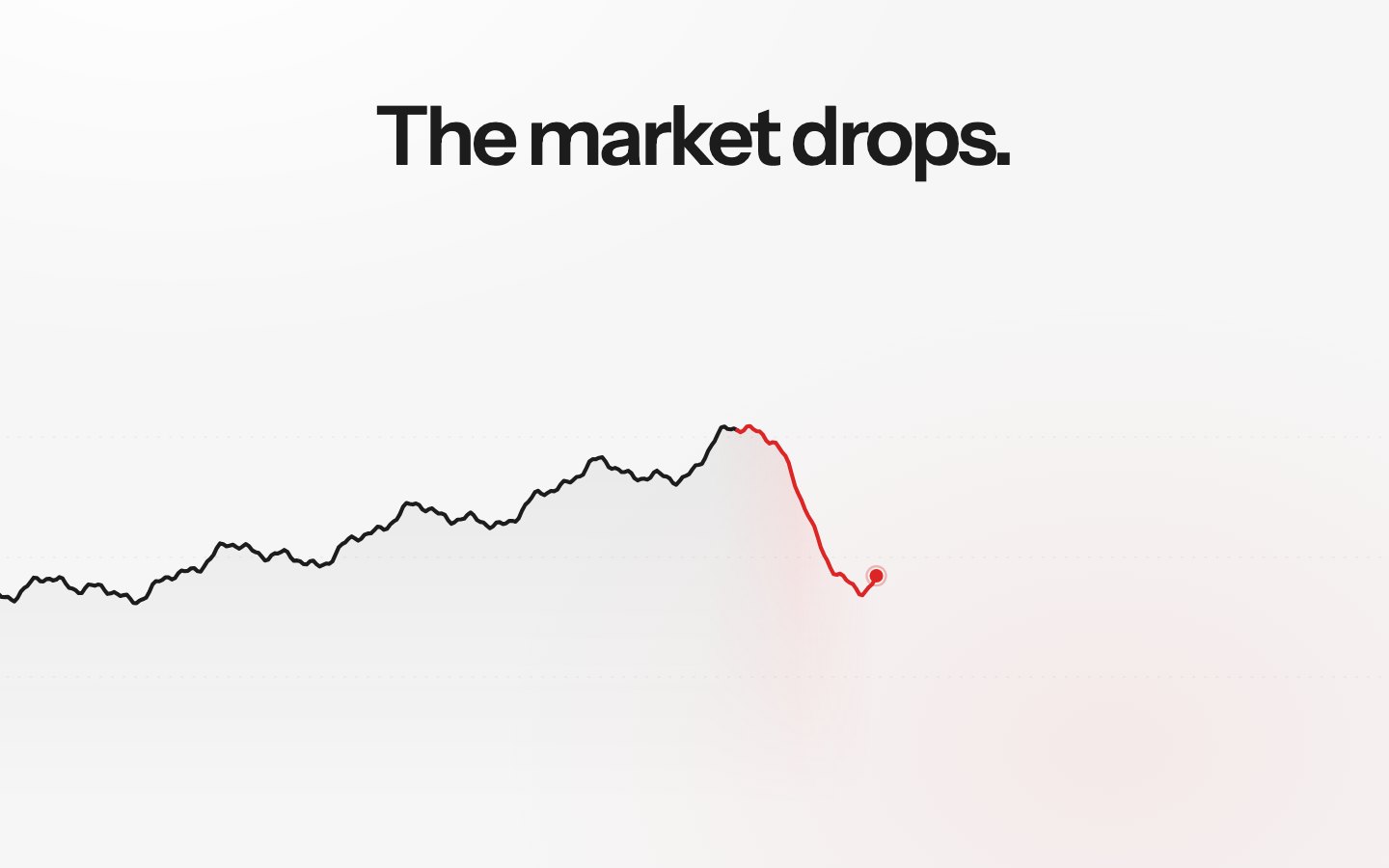
Set your entry, exit, and risk rules when you're calm.Cetagon watches your portfolio and brings each one back the moment it triggers, so you decide with a clear head, not a racing one.

For self-directed long-term and swing investors in the US, Canada, Europe, Australia, and India, focused on US equities.

cetagon/today
Today page inside Cetagon

Today · What needs your attention right now, and nothing else.

The Real Cost

The tools aren't the problem.The moment you override your own checklist is.

The First Check Starts Negotiating

You open your brokerage and the market immediately tries to renegotiate the rules you wrote when you were calm.

Stress-Trading on Gut Feelings

A dip turns into a panic sell. A rally turns into a chase. A planned stop, trim, or add gets moved because this candle feels different.

The Review Window Never Closes

Whether you hold for years or swing for weeks, the portfolio can keep pulling you back unless your checklist has edges.

It isn't a willpower problem.Decades of studies on real brokerage accounts measure the cost of reacting, and it points one way.

11.4%

Net annual return of the most active traders, chasing a market that returned 17.9%.

Barber & Odean, “Trading Is Hazardous to Your Wealth,” 2000

1.5×

How much more often investors sell their winners than their losers, banking small gains while losses run.

Odean, “Are Investors Reluctant to Realize Their Losses?,” 1998

45%

How much more men trade than women, driven by overconfidence, not by better returns.

Barber & Odean, “Boys Will Be Boys,” 2001

The proof isn't testimonials. It's the research.

Every claim we make about how investors behave comes from peer-reviewed studies, not our opinion. The whole library is open, so you can read it before you decide.

Barber & Odean · Overtrading (2000)Odean · Disposition effect (1998)Gneezy & Potters · Myopic loss aversion (1997)Barber & Odean · Overconfidence (2001)Sicherman et al. · Ostrich effect (2016)Li et al. · AI vs. buy-and-hold (2025)
How It Works

You write the rules. The AI critiques them. They run on your cadence.

Draft a rule with a clear mind. The AI flags the weak spots before you commit, then Cetagon checks it intraday or after close, so pressure never gets the last word.

Step 01

Write a rule

Describe what matters in plain language or pick from presets. Set entries, exits, sizing, how far holdings can drift from target, when one holding gets too big, and how far the portfolio can fall.

Write a rule in plain language Alert me if AAPL drops 5% Drawdown · 5%
Step 02

The AI critiques it

A short note, suggested patches as a diff, and the historical periods where the threshold would have fired. Accept, edit, or reject each, your rule stays yours.

The AI suggests an edit as a diff Your rule Drop threshold 5% 8% Medium
Step 03

Run it on your cadence

Choose intraday or end-of-day checks. When a threshold is breached, you get a precise alert that resurfaces the rule you wrote, with the context behind it, a reminder of your own plan, not noise. You decide what happens next.

Run on your cadence; a breach resurfaces the rule Intraday End of day AAPL −5.2% · Review your rule
The Signals

Build rules on 140+ signals, not just price.

Most tools ping you when a stock moves a few percent.Cetagon lets your plan watch the whole picture: valuation, macro rates, earnings, trend, and your portfolio's own risk. If you can describe the condition, you can make it a rule.

Trend & momentum

Time entries and exits on the technicals you already follow.

RSIMACDSMA 50 / 200ATR stopsBollingerADX52-week highMulti-week returns

Valuation & quality

Buy and trim on the fundamentals, not just the chart.

P/EPEGEV / EBITDAMarginsROEDebt / equityBuyback yieldP/E vs. sectorP/E vs. 5Y avgYield vs. sector

Macro & rates

Let the rate and inflation backdrop gate your moves.

Fed funds10Y & 2Y TreasuriesYield-curve inversionCPIPCECredit spreadsOilGold

Earnings & income

Act around the calendar events that actually move a holding.

Earnings surpriseAnalyst upgradesEx-dividend datesDividend-growth streaksDays to earnings

Portfolio & risk

Watch the shape of the whole book, not one ticker.

Drift from targetVolatilityBetaCorrelationSector capsHoldings countPair correlation

Index & regime

Respond to what the broad market is doing.

VIXIndex drawdownDays since a 3% dropDistance from index high

The examples above are a sample. Your rules can compare any of 140+ signals with a number, a moving average, or a benchmark, trigger on crosses, streaks, or a sustained breach, and combine several into one composite score.

The Library

29 templates, ready to run

Start from a strategy program, a rule template, or a factor score. Tune the thresholds. Add custom logic when your plan needs ATR stops, take-profit rules, momentum filters, volume checks, or a specific ticker watch. A dozen of the patterns the library covers:

200-Day MA Rotation

01

Keep trend rules from becoming gut calls.

Fires when

A market proxy crosses the moving-average boundary you chose.

RSI Mean Reversion

02

Turn oversold entries into a rule, not a hunch.

Fires when

A ticker or market proxy reaches your oversold threshold.

Dual Momentum

03

Rotate only when the ranking rule says to rotate.

Fires when

The strongest eligible asset changes on your review cadence.

Weight Shift

04

Keep your allocation close to your plan.

Fires when

Any holding's weight moves beyond your target.

One Holding Too Big

05

Catch a single position before it dominates.

Fires when

Any holding exceeds your set percentage cap.

Sector Balance

06

Catch a sector imbalance before it pulls you off plan.

Fires when

One sector grows past your target weight.

Position Drop Alert

07

Know when a position drop needs attention.

Fires when

A holding drops from its trailing peak by your chosen threshold.

Portfolio Drawdown

08

Separate portfolio-level risk from single-position noise.

Fires when

Your whole portfolio drawdown crosses your chosen limit.

Price Drop

09

Buy the fear, not the panic.

Fires when

A holding drops by your defined percentage.

Dividend Event

10

Never miss a payout decision.

Fires when

A holding approaches its ex-dividend date.

Earnings Event

11

Prepare, don't react.

Fires when

A holding approaches its earnings release.

Scheduled Rebalance

12

Discipline on a calendar.

Fires when

Your chosen review date arrives.

Swipe for more patterns →

The Evidence

Pressure-test every rule before you commit.

AI critique and backtests on every rule. Deeper history and stress scenarios.

01Plus

Structural risk watch

Weight shifts, one holding getting too big, and sector overlap are swept intraday or after close, on the cadence you choose for each rule.

Allocation drift, Technology is over its target weight Technology 34% Health Care 15% Cash 8% Technology is 6% over target weight
02Plus

Backtested rules

Run any rule against historical data before it's active: alert counts, simulated actions, and return impact. See how it would have behaved before you turn it on.

Backtest equity curve, this rule vs. buy & hold Growth of $100k +18.4% This rule Buy & hold
03Pro

Stress-tested actions

When your own rule flags a rebalance, trim, add, or exit for your review, Monte Carlo scenarios run against it first, so you weigh a range of outcomes, not urgency, and decide for yourself.

Monte Carlo, a range of outcomes weighed before you act Monte Carlo · 500 paths A range of outcomes, not urgency
The Choice

Three ways to run a portfolio.

Do it all by hand, hand it all to an AI, or keep the decisions, with your rules watching and the AI checking your blind spots.

By hand

Manual

You decide under pressure, in the moment
Driven by fear, FOMO, and the last headline
Runs on gut feel and whatever you remember
Watches charts in every spare moment
Optimizes for doing something to feel in control
Hands off

AI Agent

It decides for you, and you hand over the trigger
Driven by a black box you can't see into
Overfits the past; breaks when the regime shifts
Outsourced entirely, and you're out of the loop
Optimizes for activity, because activity looks like work
You stay in control
On your rules

Cetagon

You decide, on rules you set with a clear mind
Fires only when your own threshold is crossed
Rules you can backtest; the AI flags overfitting
Bounded review on the cadence you choose
Optimizes for sticking to the plan you set
The Report

See what your discipline was worth.

Every month, Cetagon reconciles what your rules asked with what your brokerage account actually shows: honored, overridden, and what each override cost or saved. The notes you leave when you override come back beside the outcome.No broker earns money showing you this.

June 2026 · Monthly Report

Pro

Signals honored

7 / 9

1 honored late

Override cost

$1,860

EOD-close estimate

Trailing 12 months

84%

31 / 37 honored

HonoredTRIM AAPL ×25 · Jun 3observed Jun 3
OverriddenSELL 40 NVDA · Jun 14$1,120

Your note at the time: “Felt like it had another leg, held on.”

Reconciled against your linked brokerage, observed, not self-reported.

Pricing

Pricing that scales with your discipline.

Use a single rule first. Enforce more as you're ready.

Starter

Watchlist rules with AI critique, feel the discipline loop before you connect anything.

$0


Start free

Free forever · no card required

  • 3 active rules on 10 tickers
  • 10 AI rule critiques per month
  • In-app and email alerts
  • Your rules and history stay yours

Plus

The complete discipline loop: AI critique, backtests, and all your accounts.

$24/ month

or $240/yr, 2 months free

Start 14-day free trial

14-day free trial · card required · cancel anytime · renews until you cancel

  • Unlimited brokerage accounts
  • Daily portfolio sync
  • AI rule critique on every rule
  • Unlimited rules and alerts
  • Backtest your rules (1-year window)
  • Allocation and sector dashboard

Pro

Popular

Everything in Plus, with the depth to prove a rule, and the monthly receipt for keeping it.

$39/ month

or $390/yr, 2 months free

Start 14-day free trial

14-day free trial · card required · cancel anytime · renews until you cancel

  • Everything in Plus
  • Monthly discipline report: honored vs overridden, with the dollar cost
  • 25-year historical backtests
  • 2008, COVID, Dot-Com, and 2022 stress tests
  • Monte Carlo what-if projections
  • 3x daily alert budget

Your portfolio doesn't need constant negotiation. It needs rules.

Set the entries, exits, holds, and risk limits you already believe in. Then let Cetagon bring them back when it matters.

FAQ